

The Magic of the Northern Lights
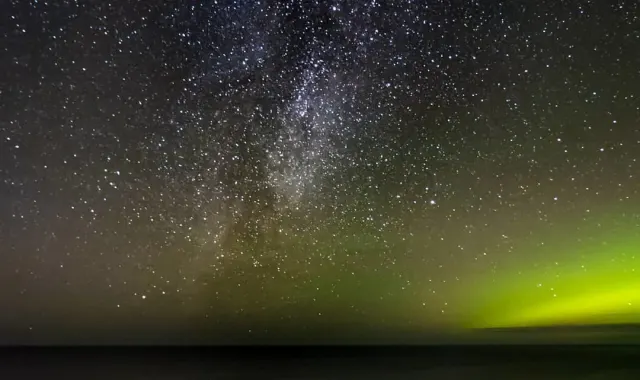
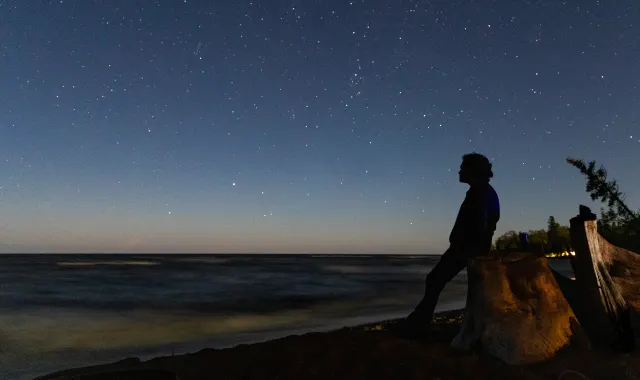
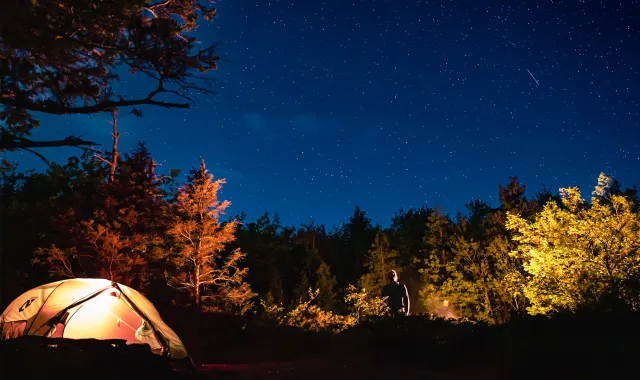
You don't have to travel to Alaska or Scandinavia to experience the Northern Lights. The Upper Peninsula offers excellent opportunities to see the aurora borealis, thanks to its northern location, relatively low light pollution and miles of open views across Lake Superior.
Seeing the Northern Lights takes a little planning, some patience and a bit of luck. Here's when and where to look, how to check the forecast and what to know before heading out.
When is the best time to see the Northern Lights in the U.P.?
The Northern Lights can appear in the U.P. any time of year, but August through April offers longer periods of darkness, making them easier to spot. Fall and spring can be especially promising, although a strong aurora display can happen in any season.
- JAN11.4hrs dark
- FEB10.2hrs dark
- MAR8.7hrs dark
- APR6.6hrs dark
- MAY4.4hrs dark
- JUN2.5hrs dark
- JUL3.5hrs dark
- AUG5.9hrs dark
- SEP8.0hrs dark
- OCT9.8hrs dark
- NOV11.1hrs dark
- DEC11.7hrs dark
Hours of full darkness at Marquette on the 15th of each month. Teal months, August through April, have the longest nights.
Keep in mind
The Northern Lights aren't visible every night. Their appearance depends on geomagnetic activity, cloud cover and darkness. Even during a period of strong activity, there's no guarantee of a show.
How can I tell if the Northern Lights will be visible tonight?
Before heading out, check two things: the aurora forecast and the local weather.
The NOAA Space Weather Prediction Center provides short-term forecasts of aurora activity. You may also see references to the Kp index, a scale from 0 to 9 measuring global geomagnetic activity. Higher numbers generally indicate that auroras may be visible farther south, but the index alone can't guarantee a sighting.
Next, check the National Weather Service for cloud cover and local conditions. Clear skies are essential, and darker conditions generally make faint auroras easier to see.
For the best chance of success, choose a location away from artificial lights with an unobstructed northern horizon.
Updated automatically
Northern Lights outlook for the U.P.
Checking the forecast
Loading tonight's outlook
If it doesn't load, check NOAA's aurora forecast and the National Weather Service before you head out.
Full darkness (Marquette)
Moon
Cloud cover
Forecast cloud cover for five viewing areas appears here.
Clearest area tonight
Where to watch nearbyPlaces to stay
Kp index forecastWhat the numbers mean in the U.P.
The live Kp forecast appears here when it loads. You can also check it at NOAA's Space Weather Prediction Center.
Highest Kp forecast
Kp 4: glow along Lake SuperiorKp 5: good chance across the U.P.
Right now:
The Kp index runs from 0 to 9 and measures how disturbed Earth's magnetic field is. The higher it goes, the farther south the aurora reaches. Clouds and moonlight matter as much as the number.
| Kp index | What you might see |
|---|---|
| 0–3 | Usually nothing. Sometimes a faint glow from the far Keweenaw. |
| 4 | Possible low on the northern horizon along Lake Superior on a clear, dark night. |
| 5–6G1 to G2 storm | Good chance across the U.P. Look north from the shoreline. |
| 7+G3 storm or stronger | Bright, colorful displays, sometimes overhead. |
Kp forecast from NOAA's Space Weather Prediction Center. Cloud cover from the National Weather Service. Darkness and moon are calculated for Marquette. Times are Eastern.
Before You Go
- Check the aurora forecast.
- Check cloud cover and local weather.
- Find a dark location with a clear northern view.
- Dress warmly and allow plenty of viewing time.
Where are the best places to see the Northern Lights in the Upper Peninsula?
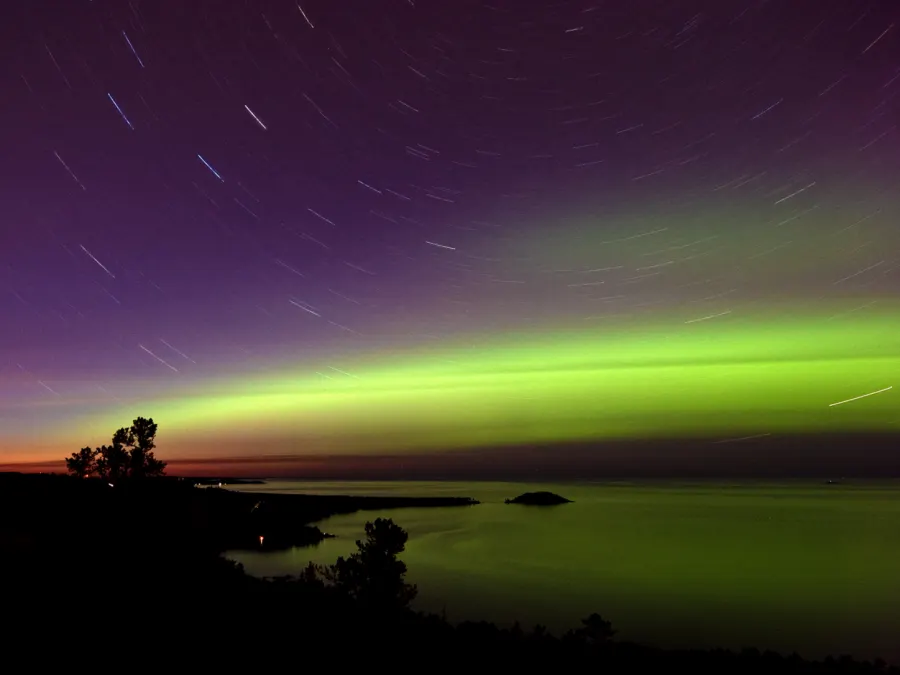
Lake Superior's southern shoreline is one of the U.P.'s greatest advantages for aurora viewing. Many beaches and overlooks offer expansive views toward the north, where the lights often first appear.
You can also see the Northern Lights from inland locations and along Lakes Michigan and Huron when conditions are favorable. The key is finding dark skies and a clear northern view.
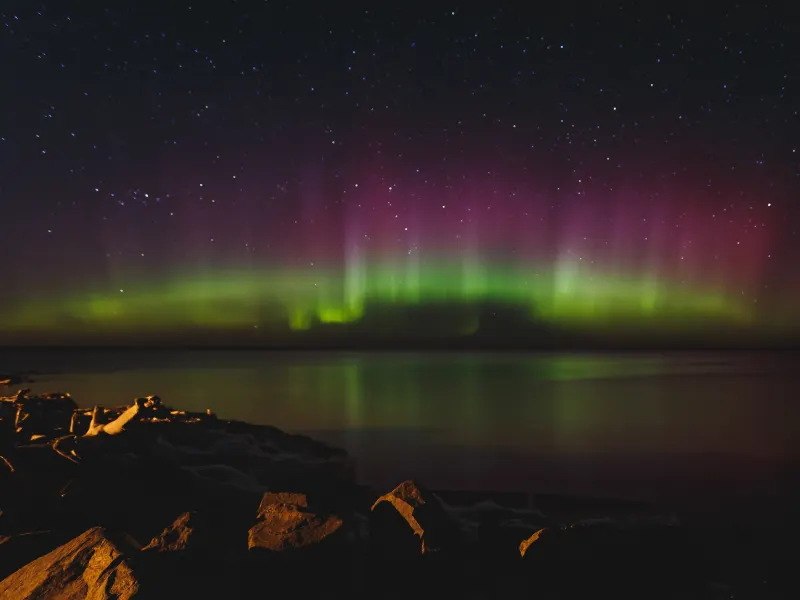 Lake Superior shoreline
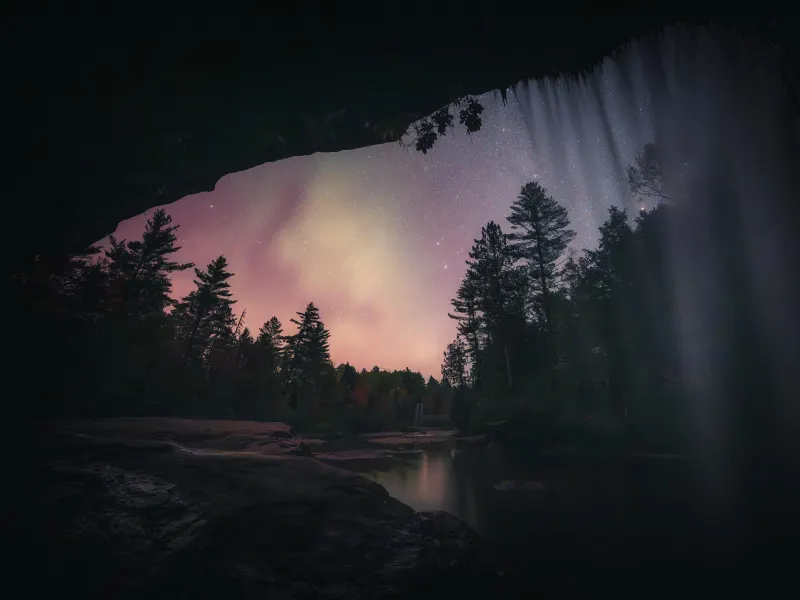 Inland
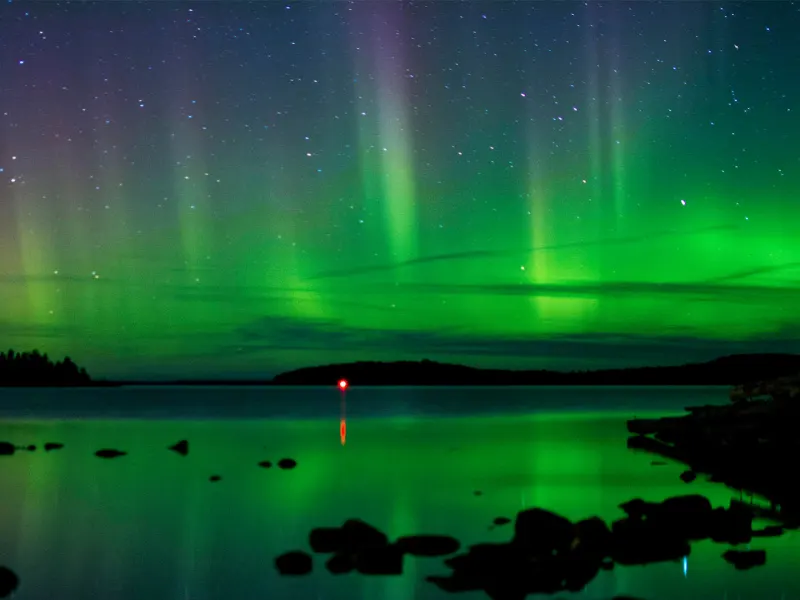 Lakes Michigan and Huron
Can you see the Northern Lights with the naked eye?
Yes, although they may look different from the vivid colors you see in photographs.
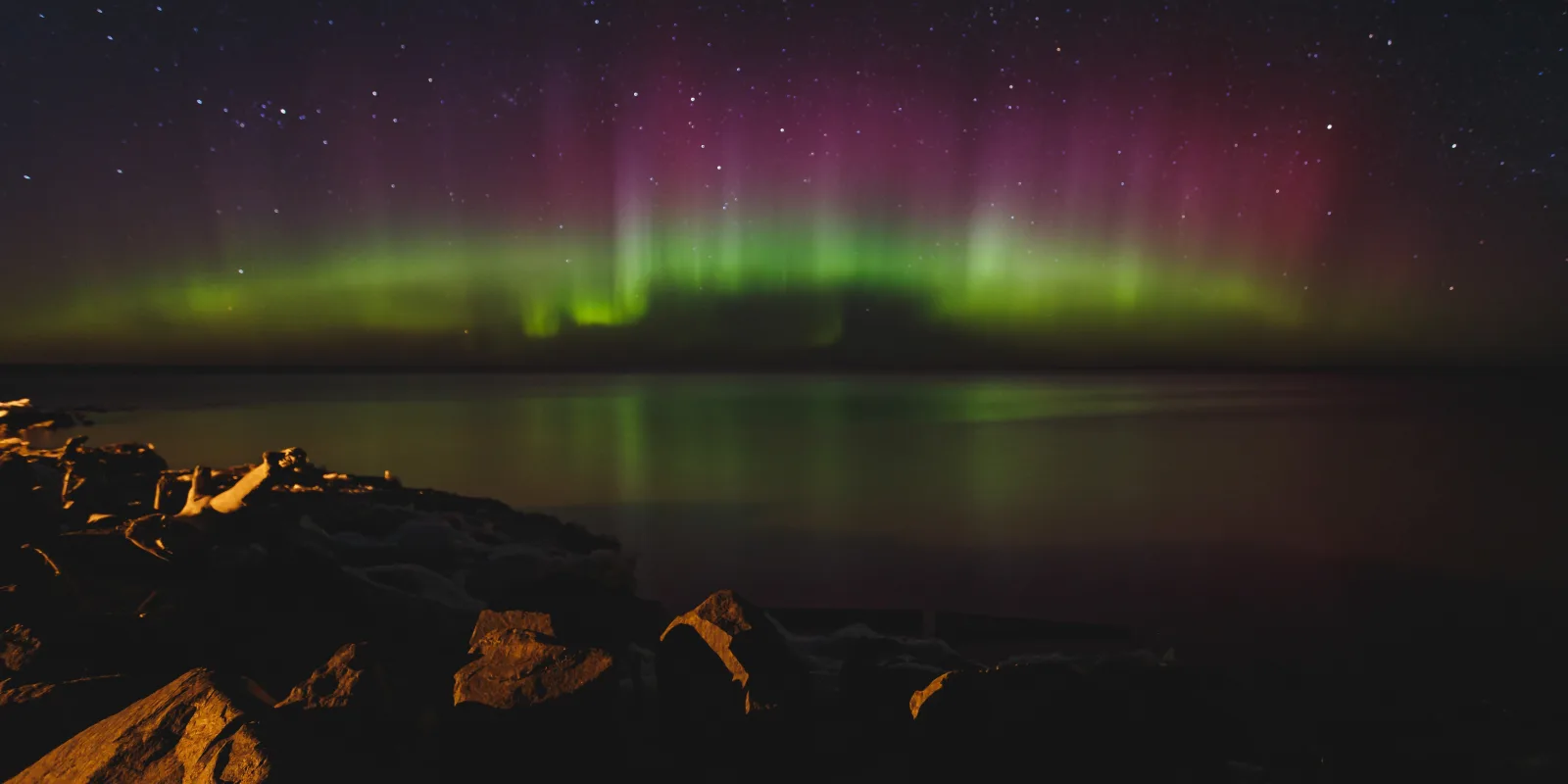
A strong aurora can produce visible curtains, ribbons and waves of green, red or purple light. Fainter displays may appear as pale or grayish glows, particularly near the northern horizon. Cameras can capture colors and details that are difficult for the human eye to detect.
If you're unsure whether you're seeing the aurora, try taking a photo with your phone's night mode. You may be surprised by what the camera reveals.
What time of night is best for Northern Lights viewing?
The Northern Lights can appear any time the sky is dark enough, although the hours around midnight are often favorable. Strong displays may begin earlier in the evening or continue into the early morning.
Rather than relying on a particular hour, watch the short-term forecast, check cloud conditions and give yourself plenty of time outdoors.
How do you photograph the Northern Lights?
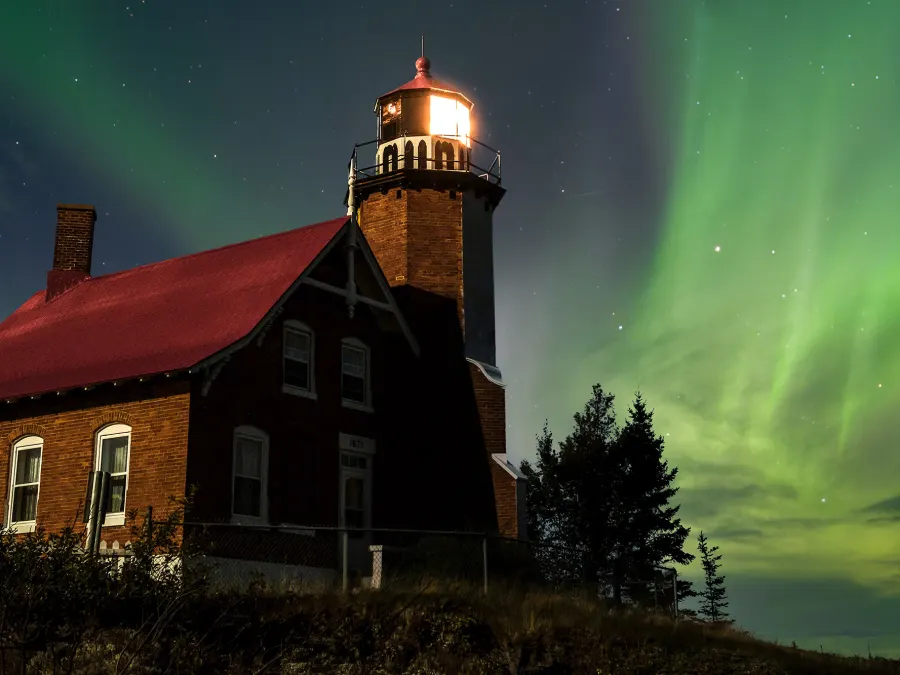
You don't need professional equipment to capture the aurora. Many newer smartphones can produce impressive images using night mode, especially when mounted on a tripod.
For cameras with manual settings, start with a wide-angle lens, a wide aperture and an ISO around 1600–3200. Experiment with exposures of a few seconds, adjusting as the aurora changes.
- Lens
- Wide-angle
- Aperture
- Wide
- ISO
- 1600–3200
- Exposure
- A few seconds
A sturdy tripod, extra batteries and a remote shutter release can help you get sharper images.
- Sturdy tripod
- Extra batteries
- Remote shutter release
What should I bring for Northern Lights viewing?
Even in summer, temperatures along Lake Superior can drop considerably after sunset. Dress in warm layers and bring a hat, gloves and sturdy footwear.
A flashlight or headlamp with a red-light setting can help you navigate while preserving your night vision. Bring a charged phone, check road conditions and let someone know where you're going.
Checklist
- Warm layers
- Hat and gloves
- Sturdy footwear
- Red-light flashlight or headlamp
- Charged phone
- Road conditions checked
- Someone knows where you're going
Plan Your Northern Lights Adventure
There's no way to guarantee a Northern Lights sighting, but the longer you stay, the better your chances. Book a room to give yourself plenty of opportunity, then choose a dark stretch of shoreline, watch the forecast and cross your fingers.